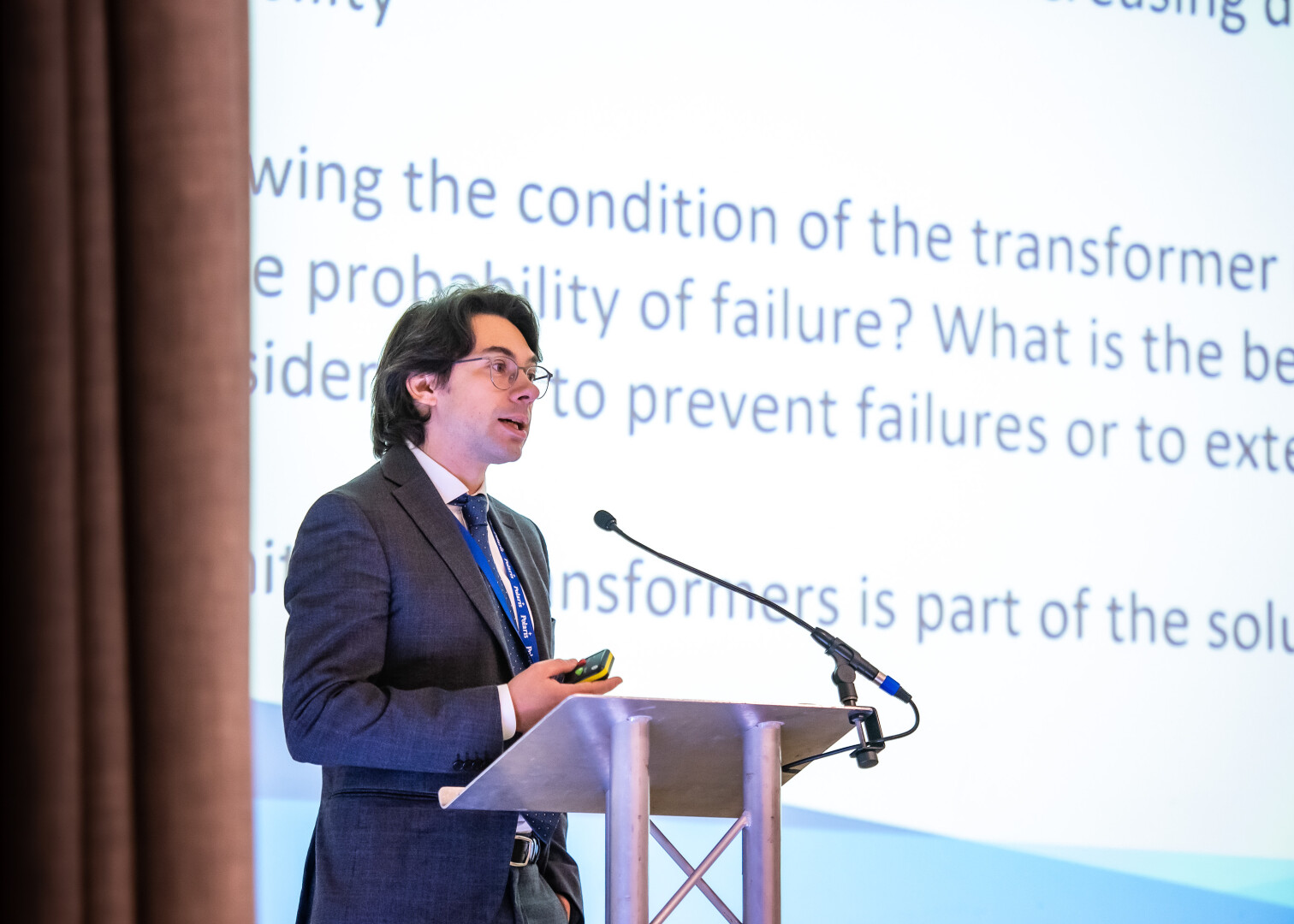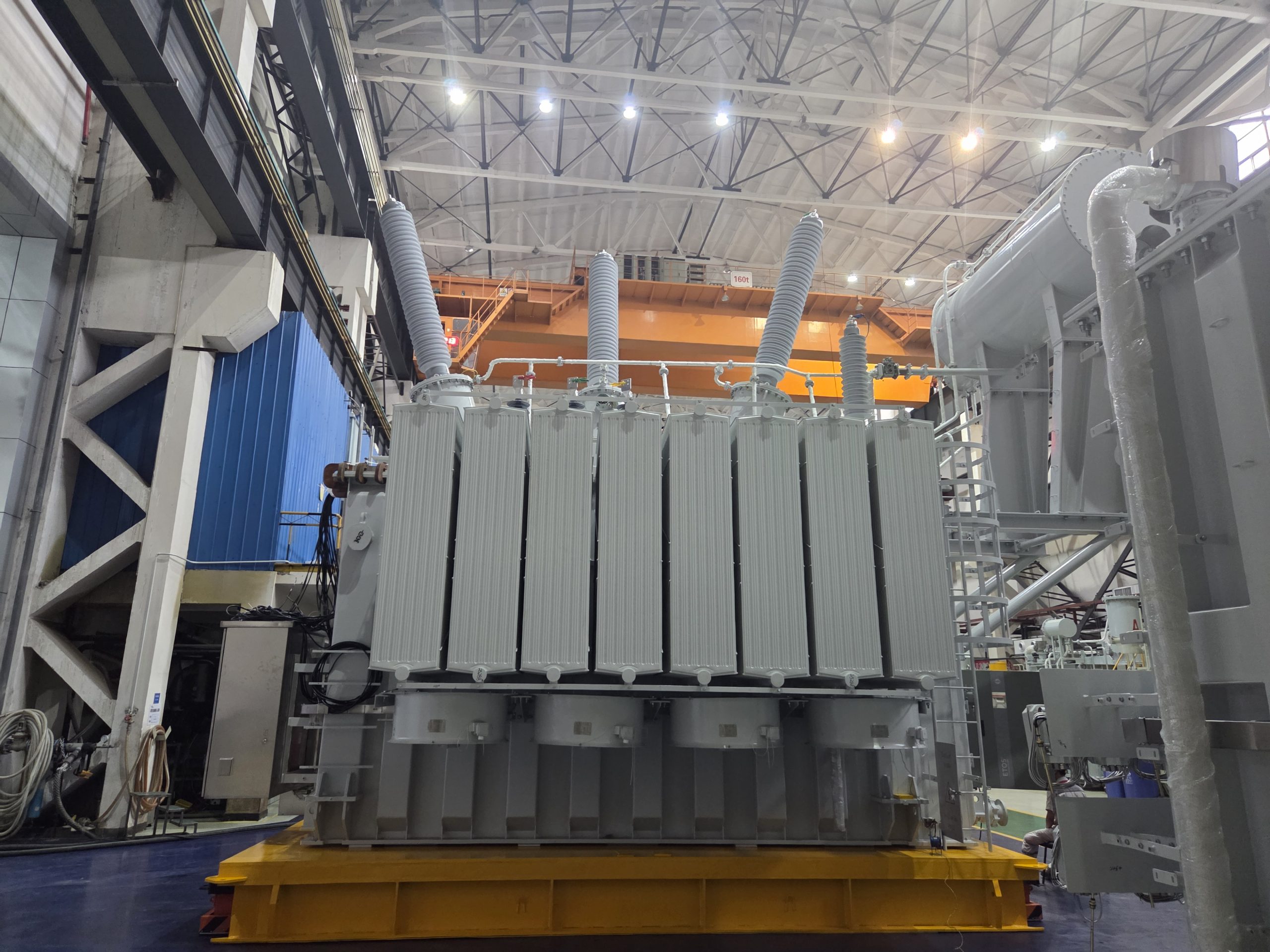
Between core stacking and the final weld of the tank lid, a power transformer’s fate is largely decided inside its active part — the assembly of core, windings and insulation that will carry full system voltage for the next thirty-plus years.
Our engineers recently spent two weeks on an OEM’s shop floor in China, witnessing the winding and active part assembly of a 220/30 kV, 130 MVA unit destined for a solar plant substation in Spain. The scope covered every stage from bare core to sealed tank: HV, LV and regulating winding construction, main insulation assembly, lead connections and crimping, active part pre-drying, Vapor Phase Drying (VPD), and pre-tanking/tanking.
Across dozens of checkpoints — disk spacing, conductor dimensions, crimp geometry, insulation clearances, grounding arrangements — no critical deviations were found. Where minor improvements were identified, such as lead routing near the on-load tap changer selector or extra insulation in cooling-restricted zones, the OEM’s design and assembly teams engaged constructively and implemented the changes on the spot.
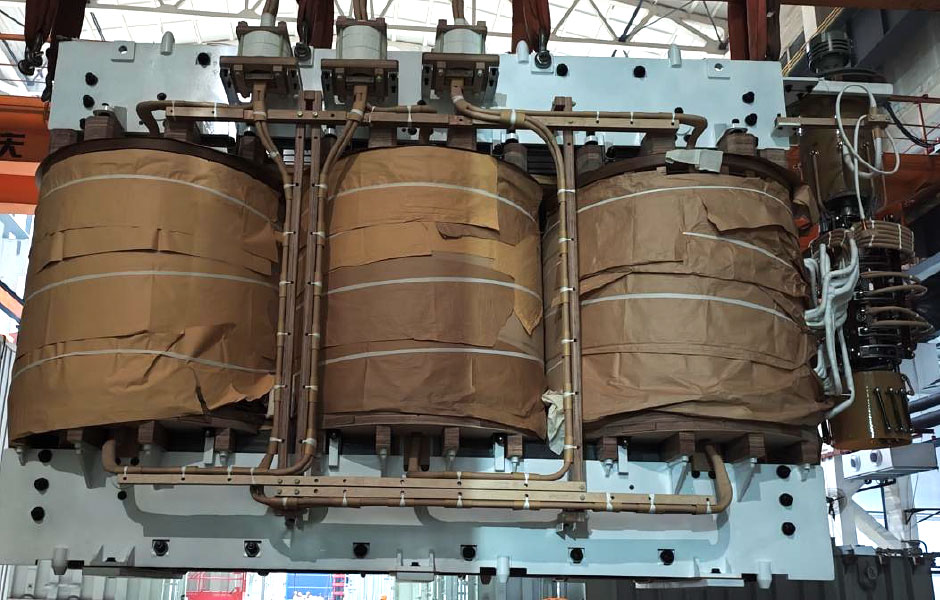
The assembled active part — core, HV, LV and regulating windings — ready for Vapor Phase Drying.
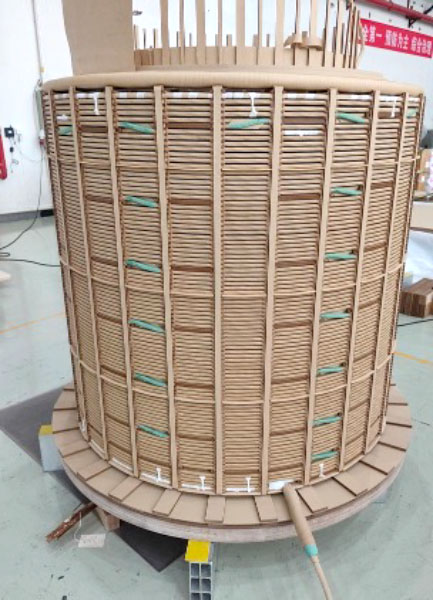
The high-voltage disc winding, insulated with thermally upgraded paper (covered with additioanl brown paper)
Turns ratio measurements taken after lead assembly showed no deviation above the 0.5% limit set by IEC standards, confirming winding integrity before drying.
The active part underwent Vacuum Phase Drying for 88 hours — 48 hours of active drying plus 40 hours under vacuum — extracting 350 litres of moisture from the cellulose insulation, a critical step for long-term dielectric performance.
Fibre-optic hot-spot sensors were installed and verified operational before tanking.
Core and clamping structure were retightened before tanking.
A few technical highlights stood out
Why does this level of scrutiny matter?
A transformer’s active part is essentially unreachable once it is in service; any weakness in winding geometry, insulation drying, or clamping pressure becomes a latent failure risk that can take years to surface, usually at the worst possible moment. Independent witnessing at this stage, rather than relying solely on the OEM’s own quality records, gives the asset owner real assurance that the unit will perform to specification for its full design life, while catching design or workmanship issues while they are still cheap and easy to fix.
This inspection is part of a broader independent oversight package we offer across the transformer manufacturing cycle: factory audits, winding and active part assembly inspection, pre-tank inspection, FAT and SAT witnessing, and installation supervision. Each stage covers a different risk window, from supplier capability through to commissioning on site, ensuring that what leaves the factory — and what eventually goes live on the grid — meets the specification the client actually paid for.